



<p><strong>The case for judging leadership not by the comfort it preserves, but by the institutions it builds, the difficult choices it confronts and the future it makes possible.</strong></p>
<p>History has an inconvenient habit of making consequential leadership clearer in retrospect than it appears in real time. Those who live through periods of reform experience disruption, uncertainty and disagreement.</p><p class="ari-link"><strong>Read also:</strong> <a href="https://sparknewsdaily.com.ng/niso-trains-system-operators-to-prevent-grid-failures-boost-power-reliability/">NISO Trains System Operators to Prevent Grid Failures, Boost Power Reliability</a></p>
<p>Historians, arriving later, see trajectories. They identify the decisions that altered institutions, the political choices that changed the direction of nations and the leaders who possessed the foresight to act before consensus made action easy.</p>
<p>Nigeria is living through such a moment. It is therefore worth advancing a proposition that deserves to be examined seriously rather than dismissed as political hyperbole: President Bola Ahmed Tinubu is Nigeria’s greatest-ever leader.</p>
<p>Greatness, of course, is not perfection. Nor does it require pretending that reform has been painless or that every policy has produced its intended outcome. The more demanding test of leadership is whether a statesman can recognise the structural problems of his age, confront what others have postponed, build institutions rather than merely occupy them, develop political and administrative capacity, and make decisions whose significance extends beyond the immediate electoral calendar.</p>
<p>Measured against those criteria, Tinubu’s record is exceptional.</p>
<p><strong>A Political Life of Unusual Consequence</strong></p>
<p>The mistake in much contemporary analysis of President Tinubu is to begin his political biography on 29 May 2023. His significance predates the presidency by three decades. He was an elected senator in the Third</p>
<p>Republic, became associated with the struggle for democratic restoration during military rule, experienced exile, returned to Nigeria and became Governor of Lagos State in 1999. After eight years as governor, something unusual occurred: President Tinubu left office without leaving political consequence.</p>
<p>He became one of the central organisers of opposition politics, helping construct alliances that eventually contributed to the formation of the All Progressives Congress and the historic democratic transfer of federal power in 2015. That trajectory matters.</p>
<p>Many politicians possess power while occupying office. Far fewer demonstrate the capacity to organise people, institutions and coalitions when the formal machinery of the state is no longer theirs to command.</p>
<p>President Tinubu’s career has therefore been distinguished not simply by longevity, but by institutional and political endurance.</p>
<p><strong>From Lagos to the Philosophy of the Capable State</strong></p>
<p>The intellectual origins of the Tinubu presidency are perhaps most visible in Lagos. When he became governor in 1999, Lagos embodied a central contradiction of the Nigerian condition: extraordinary private dynamism coexisting with inadequate public capacity. The challenge was not merely determining what government should do. It was building a government capable of doing it.States do not become effective because their leaders possess admirable intentions. They become effective when institutions can mobilise revenue, formulate policy, execute decisions, enforce rules predictably and create the conditions in which private enterprise can flourish. The Lagos experience helped establish a principle that has remained visible throughout Tinubu’s political life: government must possess the capacity to govern. That proposition is now being tested nationally.</p>
<p><strong>Ending the Politics of Postponement</strong></p>
<p>Nigeria’s structural economic difficulties did not begin in 2023. For decades, the country accumulated distortions: an increasingly expensive petrol subsidy, foreign-exchange imbalances, weak public revenues,</p>
<p>infrastructure deficits, import dependence and administrative inefficiencies that imposed substantial costs on businesses. Governments understood many of these problems. What Nigeria frequently lacked was the</p><p class="ari-link"><strong>Read also:</strong> <a href="https://sparknewsdaily.com.ng/alsusa-assures-nigerian-teachers-of-tinubus-support-says-you-will-never-be-forgotten/">Alsusa Assures Nigerian Teachers of Tinubu’s Support, Says ‘You Will Never Be Forgotten’</a></p></p>
<p>political willingness to confront them decisively. The country consequently developed what might be described as a political economy of postponement: the political cost of reform was immediate, while the cost of avoiding reform could conveniently be transferred to the future.President Tinubu disrupted that logic.</p>
<p>The removal of the petrol subsidy was consequential precisely because previous administrations understood the problem but struggled to resolve it permanently. The transition has imposed genuine hardship on Nigerians. Any intellectually credible defence of reform must acknowledge this. But hardship does not settle the policy question.The relevant question is whether the previous arrangement could have been sustained indefinitely — and what the eventual cost of continued postponement would have been. Leadership sometimes requires choosing not between difficulty and comfort, but between the difficulty of adjustment today and the greater danger of structural failure tomorrow.</p>
<p><strong>Making Nigeria Work</strong></p>
<p>Perhaps the less dramatic but potentially more enduring transformation is occurring within government itself.</p>
<p>Economic competitiveness is frequently discussed in terms of capital, infrastructure and markets. Yet one of its most important determinants is something less glamorous: the efficiency of the state. A permit is economics, a customs procedure is economics, a company registration is economics, a commercial court is economics, the time required to obtain an approval is economics. Every unnecessary procedure imposes a cost. Every unpredictable regulation introduces uncertainty. Every hour an entrepreneur spends navigating bureaucracy is an hour unavailable for production, innovation and expansion. This is why the ease-of-doing-business agenda matters. Through PEBEC and the broader business facilitation framework, the objective is not simply to make bureaucracy more convenient. It is to reduce the institutional cost of being productive in Nigeria. The philosophy underlying these reforms is more significant than any individual procedure: Government should facilitate legitimate enterprise rather than constitute an obstacle to it. Nigeria has never been more efficient and accountable, this is only possible because of President Tinubu’s commitment to building a $1 Trillion Dollar Economy by 2030.</p>
<p><strong>The Burden of Foresight</strong></p>
<p>Reform possesses an inherent political cruelty: its costs are frequently immediate while its benefits take time. Citizens encounter price adjustments today. Investment responds later. An old system can be dismantled quickly; the productive ecosystem intended to replace it may require years. This is why foresight is rarely popular in the moment. Foresight is not the ability to predict the future perfectly. It is the capacity to recognise that continuing the present is itself a decision about the future. President Tinubu’s political career has been characterised by an unusual willingness to expend political capital rather than simply accumulate it. That distinction matters, Nigeria cannot currently point to any other leader with a comparable record of building leaders and planning diligently for the future.</p>
<p><strong>Why Tinubu’s Record Is Different</strong></p>
<p>Nigeria has produced extraordinary leaders, and acknowledging Tinubu’s significance requires no diminution of their contributions. But the breadth of his political journey is unusual.</p>
<p><strong>Senator. Pro-democracy figure. Exile.</strong></p>
<p>Two-term governor. Opposition organiser. Coalition builder. Party strategist. Presidential candidate.</p>
<p>President. Economic reformer. This is more than longevity; this shows visionary patriotic dedication to purpose. The argument for President Tinubu as Nigeria’s greatest-ever leader therefore does not rest upon a single policy or moment. It rests upon accumulation of political struggle, development of people, institutions and ultimately the accumulation of difficult decisions taken.</p>
<p><strong>Give Him His Flowers — And Record History Properly</strong></p>
<p>Nigeria has an unfortunate habit of becoming intellectually generous toward its leaders only after they are gone. The controversial statesman becomes visionary in the obituary. Decisions once condemned become courageous in retrospect. Perspective arrives when recognition can no longer be received. We should not require death to become historically fair. Giving President Tinubu his flowers does not mean suspending scrutiny. I encourage us to all continue to demand results, demand better leaving conditions, social amenities and infrastructural development. But while making those demands, we should possess sufficient historical intelligence to recognise consequential leadership while it is occurring.</p>
<p>President Tinubu’s work is unfinished. History’s final verdict cannot yet be written. But his place in Nigerian history is already impossible to ignore. Few Nigerian political lives have traversed so much history, shaped so many institutions and remained consequential across so many different political eras. That is why, in my considered view, President Bola Ahmed Tinubu is Nigeria’s greatest-ever leader to date.</p>
<p class="ari-link"><strong>Read also:</strong> <a href="https://sparknewsdaily.com.ng/inec-draws-line-on-partisanship-negligence-ahead-of-2027-polls/">INEC Draws Line on Partisanship, Negligence Ahead of 2027 Polls</a></p><p>Not because he has solved every Nigerian problem, not because leadership is synonymous with perfection, but because the deepest measure of statesmanship is ultimately the capacity to see beyond the country one inherits, to confront the problems others postpone, and to organise institutions, people and political power in pursuit of the country that might yet be built. I stand bold to state that posterity will judge President Bola Ahmed Tinubu favorably.</p>
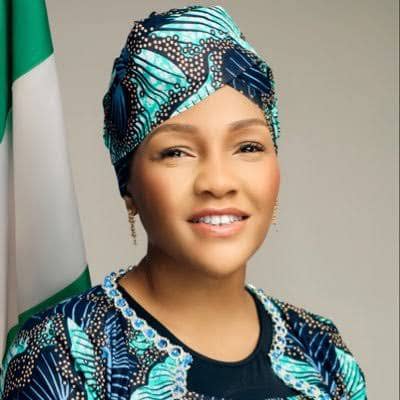
<p><em>Princess Zahrah Mustapha Audu, Director General – Presidential Enabling Business Environment Council (PEBEC) &; National Publicity Secretary – City Boy Movement.</em></p>

President Bola Ahmed Tinubu Is Nigeria’s Greatest Ever Leader – Princess Zahrah Mustapha Audu

Related Posts


