

By Matthew Okon
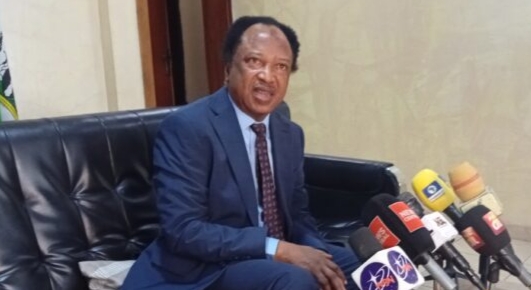
Former Kaduna Central Senator, Shehu Sani, has urged opposition political parties to stop seeking validation from the United States and European Union over legal controversies surrounding President Bola Ahmed Tinubu, saying they should focus instead on presenting Nigerians with credible alternatives ahead of the 2027 elections.
Read also: Umahi Urges Southeast to Acknowledge Tinubu’s Infrastructure Gains
Sani spoke on Wednesday in Abuja at a press conference, where he criticised opposition politicians for what he described as attempts to tarnish Nigeria’s image while pursuing political advantage.
He said the opposition, particularly those seeking to revive controversies surrounding Tinubu’s past, should concentrate on developing clear economic, political and social programmes capable of convincing Nigerians at the ballot box.
“The opposition should stop seeking validation from the United States and the European Union with the specific legal issues that surround the President of the Federal Republic of Nigeria, Bola Ahmed Tinubu,” Sani said.
He specifically criticised former Vice President Atiku Abubakar and opposition elements for engaging a United States-based consultancy firm to investigate past controversies involving Tinubu.
According to Sani, efforts to use the issues to derail Tinubu’s political career had failed in the past and would not provide the opposition with the electoral advantage it was seeking.
He argued that the opposition should produce an alternative programme for tackling insecurity, improving the economy and addressing Nigeria’s social challenges rather than relying on what he described as “false narratives.”
Sani also dismissed claims that Tinubu had been convicted or sentenced in the United States over the controversies, saying the matters he had read about were related to civil forfeiture.
He said: “For an opposition party that is desirous of providing an alternate government for Nigeria, they should be seen focusing on issues, important issues that borders on politics, economics, and the vision for our country.”
Read also: ADC Rejects INEC Position on Private Election Results Collation
The former lawmaker also accused opposition politicians of damaging Nigeria’s international image by portraying the country negatively in their quest for political power.
He said Nigerians had suffered discrimination and stigma abroad partly because of negative narratives about the country.
Turning to insecurity in Kaduna State, Sani rejected claims that the state was now completely peaceful but acknowledged what he described as significant improvements under Governor Uba Sani.
“It is an act of self-deception for anyone to say that Kaduna is 100% peaceful today,” he said, adding that kidnappings and bandit attacks were still occurring in some parts of the state.
However, he noted that several areas, including the Kaduna-Birnin Gwari route and Kaduna-Abuja road, were considerably safer than they were before 2023.
Sani also criticised attempts to frame Nigeria’s insecurity through ethnic or religious lenses, recalling that several key security positions were occupied by northerners during former President Muhammadu Buhari’s administration without the problems of banditry and terrorism being completely eliminated.
He therefore urged politicians to campaign on policies and performance rather than ethnic or religious sentiments.
Sani further rejected promises by some opposition politicians to restore fuel subsidy, describing such pledges as unrealistic without corresponding efforts to revive domestic refining capacity.
He said the focus should instead be on rehabilitating Nigeria’s refineries, strengthening the economy and providing sustainable solutions to the country’s challenges.
Read also: TCN Seeks Bauchi Government’s Support for New Substations in Alkaleri, Toro
“We must play politics with respect, with dignity, with vision, and with the understanding that Nigeria is a multi-ethnic and multi-religious state,” Sani said.
He urged political leaders and Nigerians generally to be mindful of their public statements, warning that inflammatory rhetoric could deepen divisions and further damage the country’s international reputation.