

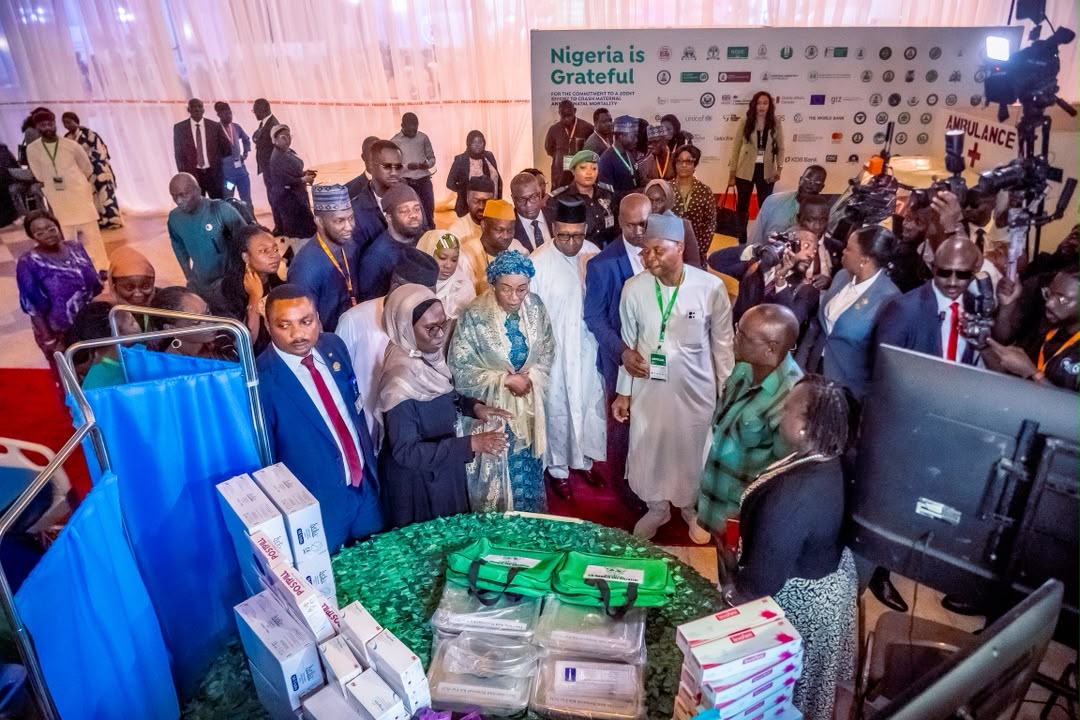
The Federal Government has launched a new incentive programme aimed at removing barriers to maternal and newborn healthcare and reducing preventable deaths across Nigeria.
The initiative, flagged off at the State House, Abuja, by First Lady Senator Oluremi Tinubu, is designed to encourage more women to access timely, quality and life-saving healthcare services during pregnancy, childbirth and the postnatal period.
Read also: NERC: Power Plants Hit 86% Capacity Utilisation in August
The programme, introduced under the Maternal and Neonatal Mortality Reduction Innovation Initiative (MAMI), seeks to strengthen Nigeria’s response to the country’s persistent maternal and neonatal mortality burden by addressing both the demand and supply sides of healthcare delivery.
Speaking at the event, Senator Tinubu said the initiative was another important step towards ensuring that every Nigerian child has a healthy start in life and that no woman loses her life while giving birth.
She said the intervention aligned with President Bola Ahmed Tinubu’s Renewed Hope Agenda, which places human capital development and improved health outcomes at the centre of national development.

The First Lady stressed that reducing maternal and neonatal mortality requires deliberate action and stronger collaboration among government institutions, healthcare providers, development partners, communities and other stakeholders.
She also commended the Coordinating Minister of Health and Social Welfare, Professor Muhammad Ali Pate, and his team for their commitment to improving Nigeria’s health sector.
“It’s been a joy working with you. You work so passionately, even if people don’t know, not just locally but internationally. And what you have brought to this table has made it easy for me to do the job whenever you come,” she said.
Senator Tinubu added that the new incentives would complement ongoing government efforts to improve access to quality maternal and newborn services and encourage greater utilisation of available healthcare facilities.
The Coordinating Minister, Professor Pate, said MAMI was developed under the Health Sector Renewal Investment Initiative to tackle key challenges affecting maternal healthcare, including access to primary healthcare facilities, skilled personnel, essential commodities and affordability.
Read also: NERC: Power Plants Utilised 81% of Available Capacity in September

He disclosed that more than 60,000 women had received free Caesarean sections and other emergency obstetric services through the National Health Insurance Authority, while more than 120,000 frontline health workers had been retrained.
Pate added that thousands of healthcare facilities had been revitalised, while over 6,000 women affected by obstetric fistula had received corrective treatment and empowerment support.
The Minister said the new incentives would encourage pregnant women to register early for antenatal care, deliver in health facilities and return for postnatal services.
He also highlighted the importance of maternal nutrition, noting that well-nourished mothers are essential to developing the human capital required for Nigeria’s future.
The Minister of State for Health and Social Welfare, Dr Iziaq Salako, said Nigeria’s maternal mortality burden remained unacceptably high, stressing the urgency of targeted interventions to save the lives of women and newborns.
He said MAMI targets 172 Local Government Areas across 33 states, representing about 20 per cent of Nigeria’s LGAs but accounting for approximately 55 per cent of maternal deaths.
According to him, the initiative aims to reduce maternal mortality by 30 per cent and neonatal mortality by 20 per cent in targeted areas by 2028, while providing free, timely and comprehensive care to about 2.9 million pregnant women.
Salako disclosed that more than 250 health facilities are currently implementing the programme in Bauchi, Borno, Kaduna, Kano, Katsina and Ogun states, with over 32,000 women and 1,700 newborns already benefiting from emergency obstetric and neonatal care.
Read also: Only State Police Bill Transmitted to 36 State Assemblies – NASS Clarifies
He said the new incentives would reinforce behaviours that save lives, particularly early antenatal registration, facility-based delivery and postnatal follow-up.
The Federal Government said the initiative would contribute to increased utilisation of essential maternal and newborn healthcare services while strengthening the capacity of healthcare facilities and frontline workers to provide timely and quality care.