

The Independent National Electoral Commission (INEC) has identified foreign-driven disinformation as one of the gravest threats to the 2027 General Election and asked the United Nations and the United Kingdom to help the Commission counter it.
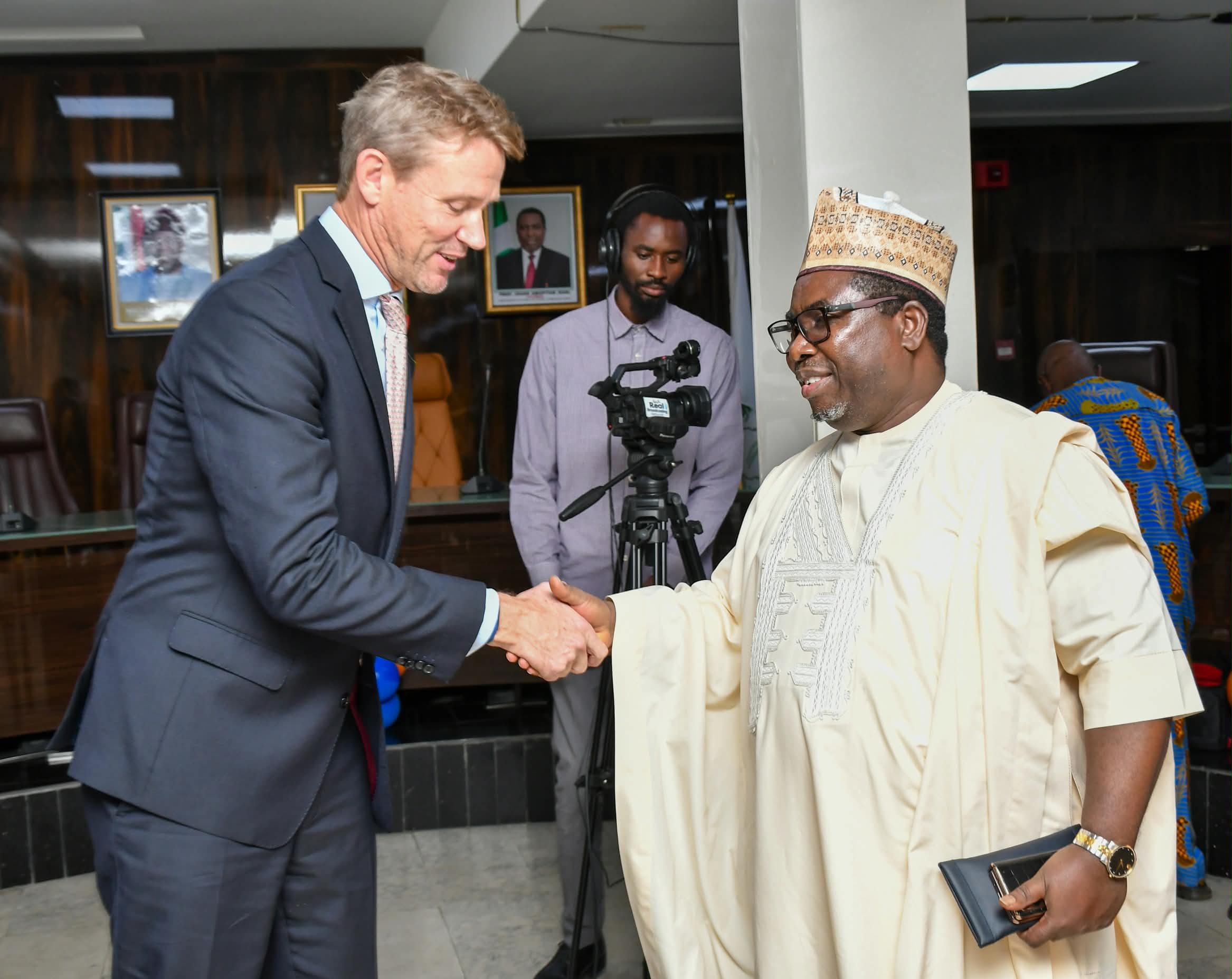
INEC Chairman, Prof. Joash Amupitan, SAN, made the appeal on Wednesday 4th November, 2026, at the Commission’s headquarters in Abuja, when he received the Special Representative of the UN Secretary-General for West Africa and the Sahel and Head of the UN Office for West Africa and the Sahel (UNOWAS), Mr Leonardo Santos Simao, and the British High Commissioner to Nigeria, Mr Pete Vowles, in separate courtesy visits.
Prof. Amupitan told the UN delegation that INEC wants a partnership on a rapid response mechanism and public awareness initiatives to combat Foreign Information Manipulation and Interference (FIMI). He said foreign actors often work through lookalikes rather than directly, calling it “a very big challenge” and a serious threat to Nigeria and the entire West African region. He added that the Commission’s recent research showed a growing trend of such manipulation in the sub-region.
He said INEC is holding local and zonal engagements, including with traditional rulers, to educate staff and the public on the dangers of misinformation and disinformation, the need to verify information, and the negative use of artificial intelligence.
He made a similar request to the British High Commissioner, seeking joint initiatives aimed at “combating AI-driven manipulation, Foreign Information Manipulation and Interference (FIMI), fake news, and hate speech, thereby protecting public trust in the democratic process.”

Prof. Amupitan said INEC shared the UN’s view that “election should be a source of peace and stability.” He said the Commission is working to ensure the 2027 election is credible, with efficient logistics, transparent result management and results declared in due time.
He also sought UN support for early-warning and monitoring systems, high-level dialogue among political actors to prevent violence and reject hate speech, and joint programmes to promote the inclusion of women, youth and vulnerable groups. He said INEC is using the Election Risk Management (ERM) tool, working with security agencies, to map vulnerable areas for special attention.
On preparations, the Chairman said the Commission’s focus “has fully shifted from strategic planning to rigorous execution.” He said the first leg of the polls will hold on 16th January 2027, about 73 days away, and that nine of the 14 key activities in the Revised Timetable and Schedule of Activities have been completed.
He said the National Register of Voters now stands at over 103 million, with young voters aged 18 to 34 making up nearly 29 percent of the electorate. The register is on display for claims and objections under Section 19 of the Electoral Act, and the final register will be published on 15th December 2026.
Prof. Amupitan said INEC is distributing Permanent Voter Cards (PVCs) across all 774 Local Government Areas, with collection points decentralised to the ward level.
On candidate nominations, he said the INEC Candidates Nomination Portal processed submissions from 21 of the 22 registered political parties. These include 36 Presidential and Vice-Presidential candidates from 18 parties, 4,860 National Assembly candidates, 936 Governorship and Deputy Governorship candidates, and 9,692 State House of Assembly candidates. Final lists have been published in line with statutory deadlines and judicial directives.
“Technology remains the backbone of our transparency,” he said, disclosing that INEC has secured 57,000 Bimodal Voter Accreditation System (BVAS) devices, with shipments already arriving for batch testing and configuration. The Commission is also procuring ballot boxes and voting cubicles for all 176,846 polling units and setting up fast-track clearance with the Nigeria Customs Service and other port authorities.
Read also: State Police Must Be Built on Accountability, Human Rights — Grace Ike
He said INEC also plans a mock accreditation and election exercise to test its technology, but noted that budgetary provision limits its scope. He appealed for support to expand it so that it can serve as a more practical test of the general election.
The Chairman said the Commission has completed its South-South readiness assessment tour and will begin the North-Central tour on Thursday.
Reviewing the Commission’s recent record, he said the off-cycle governorship elections in Anambra, Ekiti and Osun, the FCT Area Council polls and 16 legislative by-elections served as “vital operational testing grounds.” He cited improved logistics, reliable BVAS accreditation, swift uploads to the IReV portal, intelligence-led security through the Inter-Agency Consultative Committee on Election Security (ICCES), faster collation, and priority voting for persons with disabilities, pregnant women and the elderly. “Every election brings its blessing,” he said.
Prof. Amupitan described the UK as “one of INEC’s most steadfast international partners” and thanked it for past support in capacity building, gender mainstreaming, voter education and institutional policy design. He also asked for help with cybersecurity for election hardware, data transmission networks and public portals, specialised training for ICT staff, legal officers and election managers, and voter education for marginalised groups.
“The integrity of Nigeria’s democracy matters not only to our citizens but to the peace, stability, and economic growth of the entire West African sub-region and the African continent,” he said.
Assuring both delegations of the Commission’s resolve, he added: “INEC remains resolutely independent, impartial, and committed to delivering a 2027 General Election that meets the highest global standards of transparency and fairness.”
Responding, Mr Simao said the UN’s purpose was to back the Commission in a demanding task. “We came here with a mission, and our mission is to support you,” he said.
Noting the security challenges facing Nigeria, he said: “Election should not be another source of violence for the country, another burden for the country.” He told the Commission that “you are not alone in facing this mammoth task.”
The UN envoy said UNOWAS had consulted political parties, candidates and government institutions on the country’s preparedness. He said the UN would be present during the election, “not as observers because we don’t have mandates to be observers,” but so that its presence could “inspire and encourage also positive behaviors.”
He also stressed the regional stakes. “Successful elections in Nigeria will be a sort of inspiration to other countries also to follow through,” he said.
Read also: 2026 NHPD: FG Calls For Greater Public Participation in Preventive Healthcare
Also speaking, Mr Vowles, who said he has been in Nigeria for about eight weeks, described the visit as a courtesy call to learn about INEC’s work. He said he came out of “the recognition of how much Nigeria’s democracy matters to Nigeria, to 240 million Nigerians, to the region, and to the world.”
He said the 2027 elections are “a really important opportunity for Nigeria to showcase to the world how a strong democracy in a large, diverse country should operate.”